Jasper van Wensveen, Lead Engineer Overall Aircraft Design and Integration bei Vaeridion, erläutert im Gespräch mit Benjamin Zwack, wie batterieelektrische Regionalflugzeuge den Kurzstreckenverkehr in Deutschland, Europa und den USA verändern werden.
Im Mittelpunkt stehen das Potenzial eines dezentralen Streckennetzes, die dafür notwendige Infrastruktur an Regionalflughäfen und die konkrete Entwicklung des neunsitzigen Microliners, dessen Erstflug für 2028 und Markteinführung für 2030 geplant sind. Jasper spricht zudem über spannende technische Details zur Reichweite, der Batterietechnologie, den verschiedenen ökonomischen Betriebsstrategien und die grundsätzliche Rolle elektrischer Regionalflüge neben Bahn, Auto und klassischem Linienverkehr.
Das Gespräch mit Jasper habe ich auf Englisch geführt, ich danke ihm herzlich für seine Zeit, seinen umfassenden Input und den gemeinsamen Austausch über die Zukunft des Fliegens!
Benjamin Zwack: Your study „Demand and Economic Potential for Battery-Electric Regional Air Mobility in Germany“ shows considerable potential for battery-electric regional flights in Germany by 2040. In your view, what is the most important message for people who aren’t familiar with the aviation industry: Will a different form of scheduled air service emerge – one that complements rail and cars – or will it ultimately be an entirely new, additional mobility option?
Jasper van Wensveen: Regional Air Mobility leverages the benefits of new, relatively small battery-electric aircraft to redefine short-distance travel. It builds upon a decentralized set-up, allowing passengers to fly to and from regional and local airports. Across Germany alone, there are more than 100 airports suitable for such flights with battery-electric aircraft. Hence, Regional Air Mobility will provide travellers with an additional option for reaching their destination compared to today’s alternatives. The results of our study show that this new option would be faster, cheaper, or even both for many travellers.
As the aircraft used are battery-electric, there are no greenhouse gas emissions during the flight. Altogether, this represents a major improvement across multiple aspects. Initially, we expect Regional Air Mobility to operate in a way somewhat similar to scheduled air services today. You can book a ticket for a flight, just like you do today, but with the opportunity to depart from and arrive at regional or local airports closer to your home and destination. Due to the smaller size of these airports, we also expect the time between arriving at the airport and boarding the aircraft to be shorter. Because of these differences, people may consider it a new form of air travel, one that is faster, cost-efficient, and emission-free.
As such, our study shows strong demand for Regional Air Mobility, as well as a well-developed network across Germany. In our study, we also considered trip purpose and differentiated between leisure and business travellers. We found that roughly 60% of demand comes from leisure travellers, while roughly 40% comes from business travellers.
Hence, battery-electric Regional Air Mobility is a form of transportation that serves both groups. While this study focused on Germany, we see similar potential for other European countries as well as the USA.
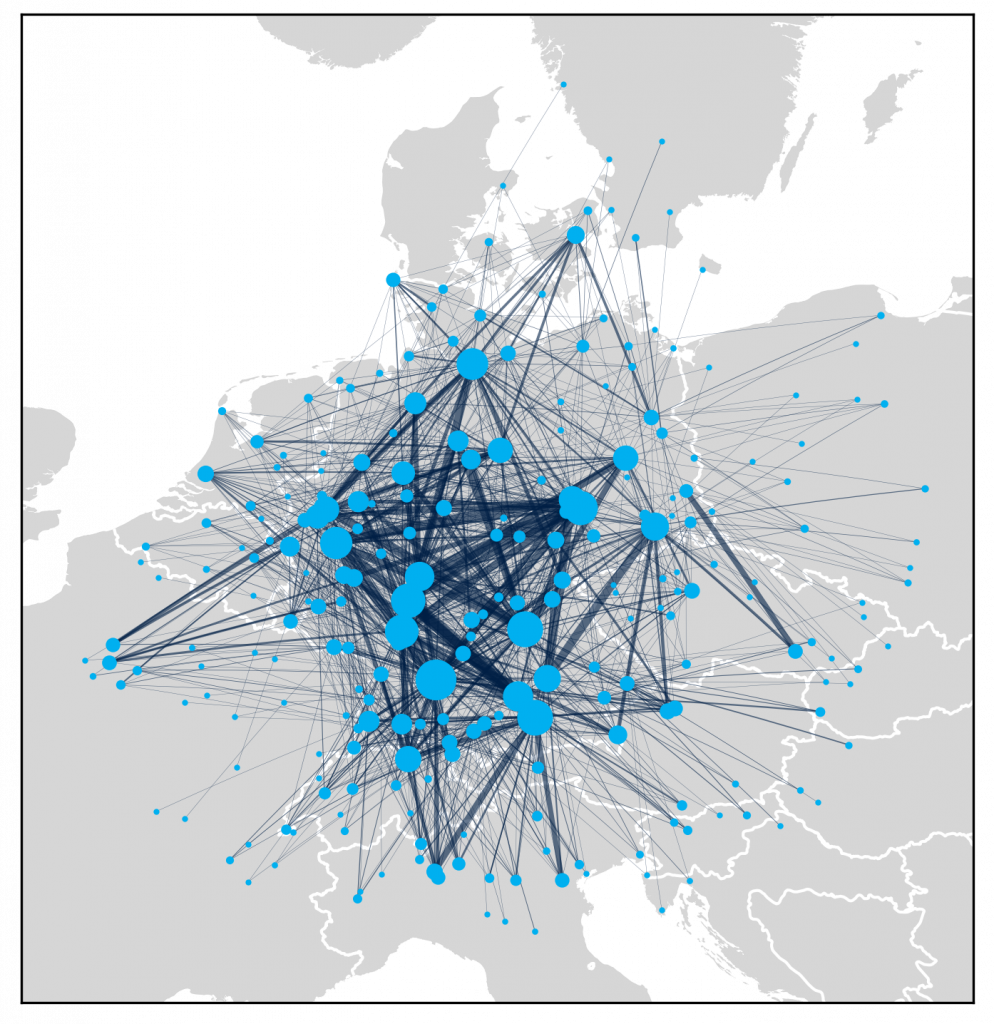
Study result: potential German Regional Air Mobility network and the connections with neighbouring countries. Sizes of the dots (airports) and lines (connections) indicate the relative number of travellers.
Benjamin Zwack: Many regional airports currently operate in a niche market and are also poorly connected to public transportation. What are your hopes and requirements regarding the infrastructure at and around airports to ensure that electric aviation can function effectively across the country in the future?
Jasper van Wensveen: Better connections between regional airports and public transport will certainly benefit Regional Air Mobility. However, given where we currently stand, it makes sense to highlight two important aspects regarding infrastructure:
- First, it is important to emphasize that these regional and local airports already exist today. We do not need to build large amounts of new infrastructure, as would be required for new high-speed rail connections or highways. Such large infrastructure projects require significant time and (taxpayer) investment. Regional Air Mobility could avoid these large investments while still introducing improved connectivity, travel times, cost savings, and emission reductions for travellers.
- Second, we need to recognize that regional airports can play a key role in the multimodal mobility and energy transition. We can make smart use of the available land and rooftops to generate and store green energy locally. This energy can then be used to enable battery-electric flight, while also serving the local community and industry. This approach can provide an economic boost to airports, while enabling electric aviation and helping address challenges such as local grid congestion and energy shortages. In other words, we can strategically use regional aviation infrastructure to also contribute to solving energy challenges – an area that our partner Albatross is actively working on in Germany.
From a practical perspective, it is important that airports begin expanding their electrical infrastructure today. Based on discussions with airports, we know that many are already doing so. For example, five airports in Bavaria are collaborating to establish an initial network for electric flight (see https://www.bayern.de/elektroflugstreckennetz-bayern/). Also, in the Netherlands and other countries more and more electric aircraft chargers are being installed at airports. At the same time, airports indicate that installing the necessary infrastructure is a multi-year process. A major contributor is the time required to obtain construction permits and secure increased grid connections. Greater support from policymakers and grid operators would help accelerate this process. Ultimately, addressing grid congestion will require coordinated efforts—and airports can play an important role in this solution.
Benjamin Zwack: Let’s take a look at the Microliner that Vaeridion is currently developing: What dimensions, range, and technical features will the aircraft have when it takes off? And what does the roadmap look like leading up to the first flights?
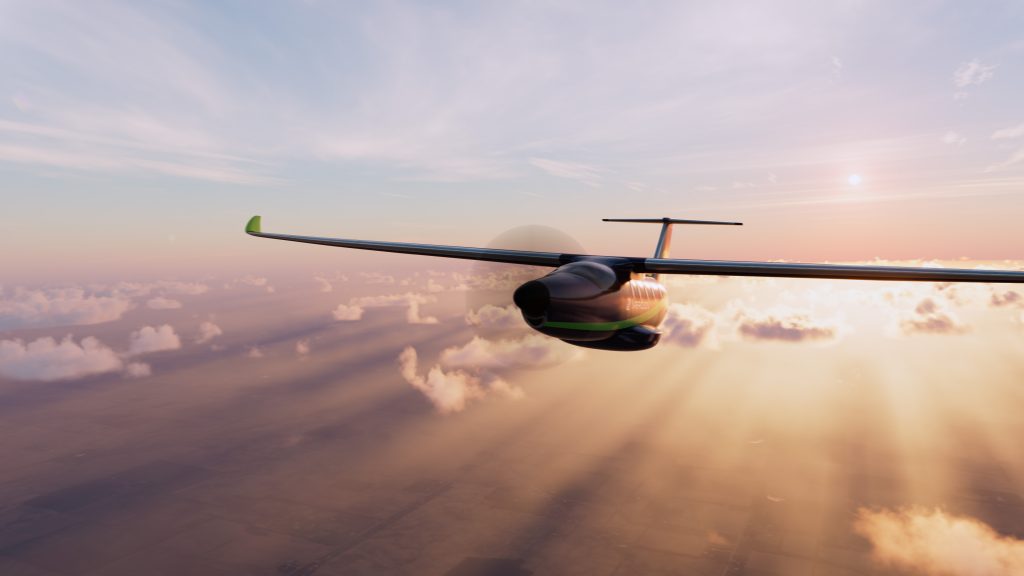
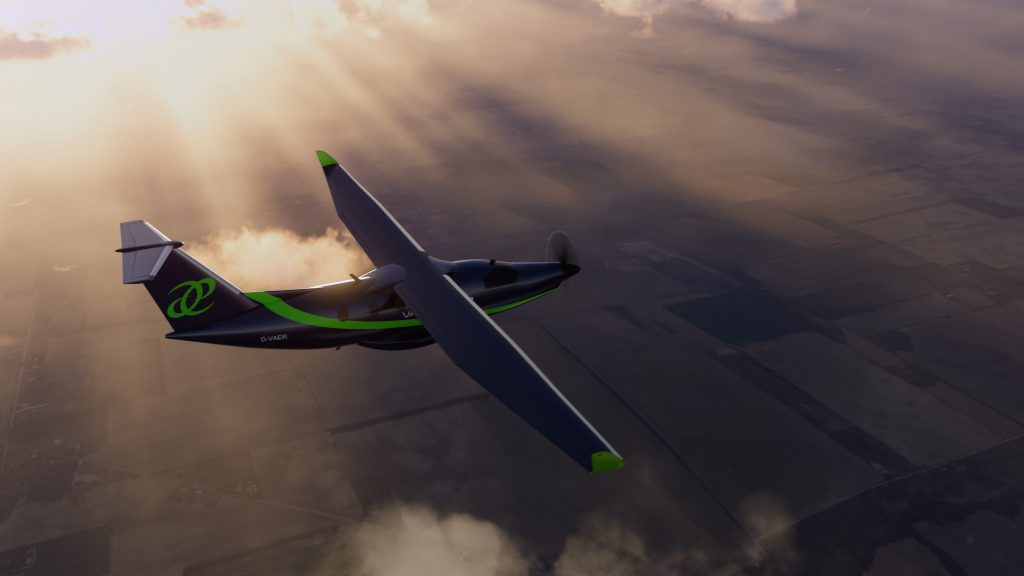
Jasper van Wensveen: Our Microliner aircraft is 100% battery electric and can transport up to two pilots and nine passengers. It can fly a commercial air transport IFR mission of 400km while meeting all regulatory reserve requirements. The aircraft has a wingspan of 23.99 m, which improves aerodynamic efficiency and helps maximize the achievable range with current battery technology. Another distinctive feature is its propulsion system: the aircraft has a single propeller driven by two independent electric motors.
This multi-engine configuration enables commercial operations while providing redundancy and increased safety. The first flight of the Microliner is planned for 2028. Entry into service is expected in 2030, following a two-year certification and flight test campaign.
Benjamin Zwack: In anticipation of the commercial operation of regional electric aircraft, your study weighs, so to speak, two „operating modes“ for an electric aircraft: maximally high flight speeds and thus short flight times versus low energy consumption and, consequently, slower battery degradation but longer flight times. At first glance, it may seem surprising that the „minimum flight time“ strategy is the more promising one. Could you briefly explain that?
Jasper van Wensveen: The reason for investigating both operating strategies in our study was to test the hypothesis of whether, from an economic perspective, it would be more beneficial for operators to extend battery life by flying at lower speeds. The underlying principle is that flying slower reduces energy consumption, thereby placing less stress on the battery. As a result, battery life would increase, requiring less frequent replacement and reducing costs for the operator.
However, for passengers, there is a trade-off between travel time and willingness to pay. The faster the journey, the more passengers are typically willing to pay. By flying at lower speeds, the operator may therefore lose revenue. Our results showed a clear trend: the increase in passenger willingness to pay for faster travel significantly outweighs the potential cost savings from reduced battery degradation. Of course, additional factors also play a role, such as crew costs, aircraft utilization, and energy costs. However, these effects were found to be relatively minor compared to the impact of passenger willingness to pay.
Benjamin Zwack: Your study is based on a battery-electric nine-seater with a range of about 400 kilometers. How do you see the future in this regard, and from today’s perspective and looking ahead, what are the biggest technical challenges for further development?
Jasper van Wensveen: The aircraft used in our study is the Microliner, based on battery cell technology that is entering the market today. Hence, the 400 km range reflects the expected operational capability at entry into service in 2030 under commercial IFR conditions. Battery technology and energy density continue to improve over time. Future generations of our battery packs can incorporate these improvements thus increasing the aircraft range. For example, depending on technological progress, a second-generation battery pack could enable a range increase from 400 km to maybe 500 km. And a third-generation battery to 600km.
In simple terms, the maximum aircraft range will increase over time as battery technology advances. For Regional Air Mobility, this is very beneficial, as it will gradually enable additional routes and expansion of the network. Regarding technical progress, we recently completed the Preliminary Design Review (PDR), a key engineering milestone.
This confirms both the maturity of the aircraft concept and the robustness of our engineering approach. In the next phase, we will continue refining the aircraft design and strengthening collaboration with strategic suppliers, certification authorities, and industry partners as we progress towards the Critical Design Review (CDR). We also closely engage with our Market Advisory Committee – comprising airlines, operators, airports, and other aviation industry stakeholders – to ensure that the Microliner aligns with the market needs.
Benjamin Zwack: If you imagine yourself in the year 2035 or 2040: What do you think commercial aviation might look like? So, which usage scenarios are your main focus? Will there be more (smaller) airlines again and/or more (regional) connections away from major hubs?
Jasper van Wensveen: Already today, small electric aircraft like the Pipistrel Velis Electro, are certified and flying. By 2035 we expect battery-electric aircraft to be operating across multiple European countries and the USA. Airlines and operators will operate these aircraft on specific routes, allowing passengers to gain their first experience with electric flight. Ahead of ILA Berlin, we announced that we secured over 100 new commitments from six new customers, and we continue to engage with many more.
- A significant portion of demand is expected to come from passenger transport, including both standard 9-passenger operations and premium on-demand or charter services.
- In addition, there is strong interest in cargo configurations, as well as niche applications such as air ambulance, medical flights, and governmental or military use.
- Interest from airlines and operators is diverse, ranging from major established carriers to smaller regional airlines and new entrants focusing on pooled on-demand mobility.
Our aircraft can serve all these airlines and their operational business models. As electric flight gains momentum over the years, we expect a more decentralized Regional Air Mobility network in Germany by 2040. While major hubs will remain important for long-distance travel, regional electric flights will enable fast and climate-friendly connections between smaller airports, for both passengers and cargo.
The mentioned study „Demand and Economic Potential for Battery-Electric Regional Air Mobility in Germany“ was published in January 2026 and can be found at:
Reuel, Franz & Wensveen, Jasper & Schaerer, Elisa & Armanini, Sophie (2026). Demand and Economic Potential for Battery-Electric Regional Air Mobility in Germany. 10.2514/6.2026-2281.
All photos and illustrations: (c) Vaeridion | www.vaeridion.com