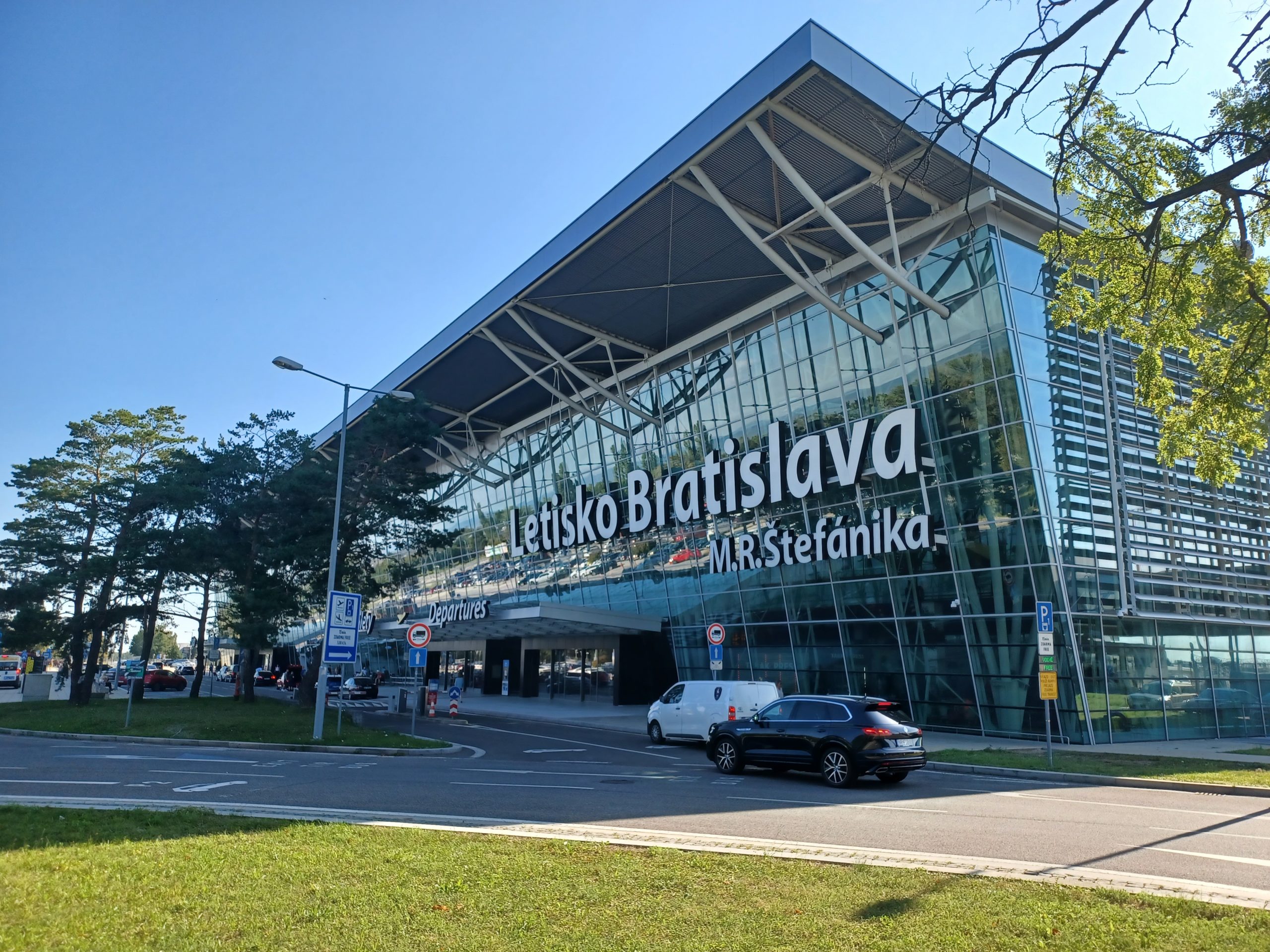
What role can smaller airports play in a European aviation system increasingly dominated by major hubs? Located less than 100 kilometers from Vienna, Bratislava Airport operates in the immediate vicinity of one of Central Europe’s largest aviation gateways – yet it follows a very different strategy.

In my interview, Mgr. Veronika Demovičová, PhD, spokesperson of M. R. Štefánika Airport Bratislava (BTS), explains how regional airports position themselves between low-cost carriers, point-to-point networks and changing passenger demand. She discusses Bratislava’s competitive advantages, current trends in route development, and how smaller airports are preparing for the future of European aviation.
- Many regional airports today are located close to large international hubs. Bratislava is less than 100 kilometers from Vienna. In the long term, what role can such airports still play in the European aviation system when they are competing with much larger networks nearby?
We do not compare Bratislava Airport with Vienna Airport. Although the two airports are only about 60 km apart, they operate on very different scales. According to ACI Europe statistics, Bratislava Airport belongs to the Medium Airports category, handling between 1 and 10 million passengers annually, while Vienna Airport falls into the Mega Airports category with more than 30 million passengers per year. Each airport therefore has its own mix of airlines and range of air connections.
It is true that low-cost carriers dominate scheduled flights at Bratislava Airport, including Ryanair, Wizz Air and Pegasus Airlines. However, this represents a major advantage for passengers, as these airlines offer very affordable ticket prices. Another advantage of our airport – especially for Slovak passengers who do not fly frequently or travel only once a year for their summer holiday – is the wide range of charter flights to holiday destinations, as well as the possibility to communicate in their native language and benefit from easier orientation for Slovak- and Czech-speaking travellers.
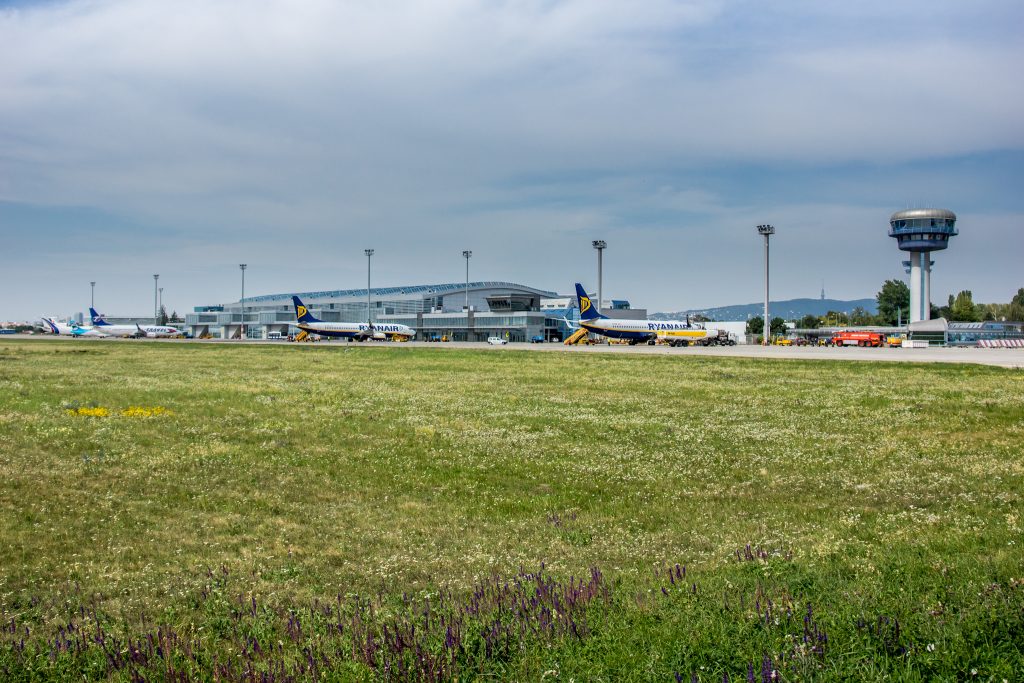
Among Bratislava Airport’s key advantages are its compact and easy-to-navigate terminal, fast passenger processing from check-in to boarding, proximity to the city centre (9 km), and competitive landing and parking fees together with better slot availability for airlines.
Furthermore, charges for departing passengers are more advantageous when compared to larger airports.
- Airports like Bratislava rely on low-cost carriers and point-to-point connections. How do you estimate this business model in the long run, and what strategies could regional airports pursue to become less dependent on the decisions of individual airlines?
We highly value the long-standing, fair and stable cooperation with our low-cost partners, such as Ryanair, which has been operating at Bratislava Airport for 20 years, Wizz Air, which has been offering flights from Bratislava for 10 years, and Air Cairo, which has also been flying from Bratislava to Egypt for 10 years. Pegasus Airlines has been operating regular flights to Istanbul and Antalya for the past two years. Smartwings provides both scheduled and charter flights.
We strive to offer equal conditions to all airlines operating at Bratislava Airport, enabling them to further develop their existing route networks, which has proven successful. We also offer an attractive incentive programme for new airlines interested in launching scheduled routes from Bratislava.
At the same time, it is our ambition to attract legacy airlines and connect Bratislava with major European hubs. Therefore, we regularly participate in aviation conferences, where we present Bratislava Airport as a unique opportunity for the development of air connectivity in Central Europe.
- Many regional airports mainly serve leisure traffic with seasonal demand patterns. Are you currently observing changes in passenger behavior, for example driven by remote work, sustainability debates, or new mobility options?
This is not entirely the case at our airport, as more than 70% of our traffic consists of scheduled flights, which still dominate over charter or other non-scheduled operations. Moreover, this share will increase further in 2026. In November last year, Wizz Air opened a base at Bratislava Airport, stationing four Airbus A321neo aircraft. The airline is expanding its network of scheduled routes from two to 31 routes. Ryanair also offers flights to 33 destinations and added another based aircraft to its Bratislava base in October last year. This enables airlines to continue growing in the area of scheduled air transport.
Although some routes are served by more than one airline, passengers benefit from a wider choice of flights at different times and at different price levels.
We are still missing air connections to Ukraine and Moscow, which cannot currently be operated due to the Russia–Ukraine conflict. In the past, these routes were among the most prominent at our airport.
At present, we are also observing airlines adding connections to Balkan countries, such as Bosnia and Herzegovina, Bulgaria, Romania, North Macedonia, Moldova, Serbia and others, as many workers from these countries are employed in Slovakia or Austria.
I do not believe that remote work or sustainability debates currently have a significant impact on travellers’ decisions when choosing to depart from Bratislava.
- Larger airport hubs tend to become broader mobility systems and include rail and road transport. What role will smaller airports play in the future? And, looking ahead, how is Bratislava Airport preparing for the transition towards more sustainable aviation (sustainable aviation fuels, electric or hybrid-electric aircraft on regional routes)? Do you see these technologies creating new opportunities for smaller airports in the coming decades?
Sustainability is still primarily an airline-related topic rather than an airport one, particularly when it comes to fuel use and emissions.
In 2025, Bratislava Airport already met the mandatory 2% SAF (Sustainable Aviation Fuel) requirement. However, the airport does not work directly with airlines to achieve this target. Instead, we have a contract with the fueling company Slovnaft, which monitors the relevant European regulations and ensures aircraft fueling for the airlines.
At the same time, we are taking several additional steps to contribute to environmental protection. We are increasing the use of electric vehicles on the apron, replacing our lighting systems with energy-efficient LED technology, and actively working on a range of ESG initiatives.
Veronika, thank you very much for your insights!
photo credit: Bratislava Airport